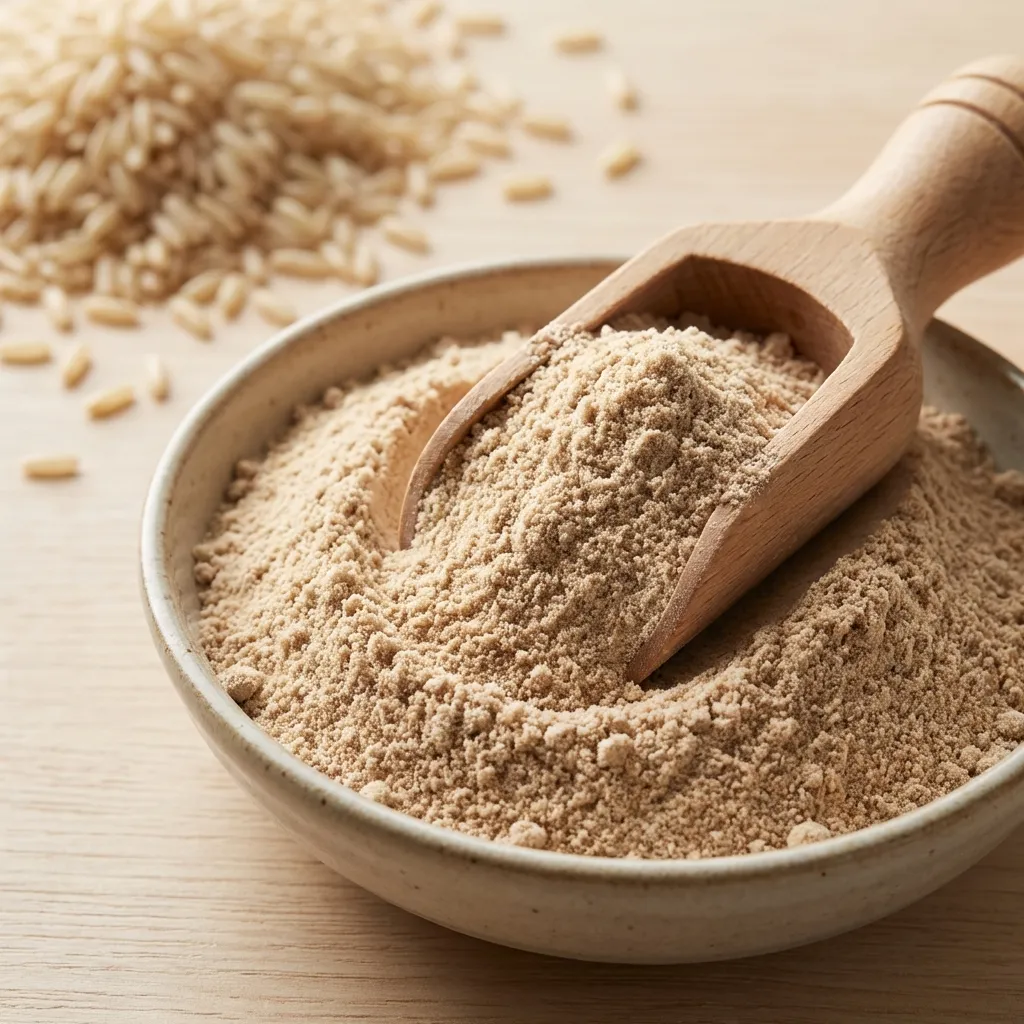
Introduction: The Industrial Significance of Brown Rice Protein
In the global transition toward sustainable, allergen-free, and plant-based nutrition, brown rice protein (BRP) has emerged as a cornerstone ingredient. Derived from the whole grain of Oryza sativa, brown rice protein is a premium, hypoallergenic protein source that serves as a highly functional alternative to animal-derived whey and common plant allergens like soy and wheat.
Historically perceived as a secondary protein due to solubility challenges and grain-like textures, intensive research and development in industrial biotechnology have transformed BRP. Today, advanced enzymatic isolation techniques and micronization technologies have unlocked its potential. For research and development (R&D) engineers, food scientists, and procurement managers in the nutraceutical and food science sectors, BRP is no longer just a “clean label” alternative—it is a high-performance bio-macromolecule capable of delivering precise nutritional and structural benefits.
This guide provides a comprehensive technical overview of the agronomy, manufacturing biochemistry, nutritional profile, quality control parameters, and formulation characteristics of industrial-grade brown rice protein.
1. Raw Material Sourcing & Agronomy
The quality, safety, and functionality of finished brown rice protein are fundamentally determined by the agronomic inputs and raw material selection.
1.1 Varietal Selection and Cultivation
Oryza sativa varieties (mainly Indica and Japonica subspecies) vary in their starch-to-protein ratio and the composition of their protein fractions. Brown rice typically contains 7% to 9% total protein by dry weight. Unlike white rice, which undergoes polishing to remove the outer bran layer and germ, brown rice retains these anatomical parts. The bran and germ contain significant quantities of lipids, fiber, micronutrients, and a highly concentrated protein fraction.
1.2 Soil Chemistry and Metal Accumulation
Rice plants are known hyperaccumulators of silicon, sharing transport pathways that also take up heavy metals from the soil. Specifically, rice plants grown in flooded paddies (anaerobic conditions) are susceptible to absorbing**arsenic (As)andcadmium (Cd)**via silicon and iron transport channels (such as Lsi1 and Lsi2). For industrial applications—especially infant formulas and medical nutrition—sourcing brown rice from regions with verified low-heavy-metal soil chemistry is critical. Suppliers must audit soil pH, water source purity, and geographical industrial runoff histories. certification under the USDA National Program (NOP) or EU Regulation (EU) 2018/848 is highly valued not only for pesticide-free status but also for the stringent soil-quality monitoring it demands.
2. Manufacturing & Extraction Biochemistry
Isolating protein from a starch-rich matrix like brown rice (which contains 70% to 80% starch) requires precise biochemical processing to maximize yield and purity while maintaining the native state of the protein.
graph TD
 A[Brown Rice Grain Flour] --> B[Water Slurry Mixing]
 B --> C[Liquefaction: Thermostable alpha-Amylase @ 85-90°C]
 C --> D[Saccharification: Glucoamylase @ 55-60°C]
 D --> E[Centrifugation & Separation]
 E --> F[Starch/Glucose Stream]
 E --> G[Protein Concentrated Slurry]
 G --> H[Washing & Purification]
 H --> I[Micronization & Homogenization]
 I --> J[Low-Temp Spray Drying]
 J --> K[Finished Brown Rice Protein Powder]
2.1 The Enzymatic Hydrolysis Method (The Gold Standard)
The enzymatic process is the preferred modern industrial method. It utilizes specific carbohydrate-cleaving enzymes to dissolve the starch matrix, leaving the insoluble protein fraction behind.
1.Slurry Preparation: Cleaned brown rice grains are milled to a specific mesh size and mixed with deionized water to form a slurry of 20% to 30% solids. 2.Liquefaction: The slurry is heated to 85°C–90°C. A food-grade, thermostable**$\alpha$-amylase**(derived from Bacillus licheniformis or Bacillus amyloliquefaciens) is introduced. This enzyme hydrolyzes the $\alpha$-(1,4)-glucosidic linkages in amylose and amylopectin, converting gelatinized starch into shorter-chain soluble dextrins. 3.Saccharification: The temperature is lowered to 55°C–60°C, and the pH is adjusted to 4.5–5.5.Glucoamylase(amyloglucosidase) is added to cleave both $\alpha$-(1,4) and $\alpha$-(1,6)-glucosidic bonds from the non-reducing ends of dextrins, converting them completely into D-glucose. 4.Separation: The mixture undergoes high-speed decanter centrifugation. The soluble glucose-rich syrup is separated from the insoluble protein cakes. The glucose stream is diverted for use as brown rice syrup or crystalline glucose. 5.Washing and Purification: The protein cake is subjected to multiple stages of counter-current washing with purified water to remove residual soluble sugars, mineral ions, and enzyme residues. 6.Drying: The purified protein slurry is pasteurized and spray-dried. Modern spray-drying systems use inlet temperatures of 160°C–180°C and outlet temperatures of 75°C–85°C to limit thermal denaturation, preserving the functional properties of the protein.
2.2 Alkaline Extraction and Acid Precipitation (Traditional Method)
Historically, alkaline extraction was widely used due to its simplicity and low enzymatic costs.
- Mechanism: The milled rice flour is dissolved in an alkaline solution (pH 9.0 to 11.5 using sodium hydroxide, $\text{NaOH}$). Under high pH, the rice proteins (predominantly glutelins) solubilize. The insoluble starch and fiber are separated via centrifugation. The liquid supernatant is then adjusted to the isoelectric point of rice protein (pH 4.0 to 4.5 using hydrochloric acid, $\text{HCl}$), causing the proteins to precipitate out of solution.
- Drawbacks: 1.Denaturation: Severe pH shifts damage the tertiary structure of the protein, reducing its solubility and gelling capabilities. 2.Lysinoalanine Formation: High alkaline environments induce the cross-linking of lysine and alanine residues, forming lysinoalanine (LAL), which reduces protein digestibility and raises potential renal health concerns. 3.Salt Accumulation: The neutralization process generates high levels of sodium chloride ($\text{NaCl}$), requiring extensive washing cycles that generate large volumes of wastewater.
2.3 Concentration vs. Isolation
BRP is commercialized primarily in two grades:
- Brown Rice Protein Concentrate (80% dry basis): Contains approximately 80% protein, with the remaining 20% comprising natural rice lipids (3-5%), dietary fiber (3-6%), ash (2-4%), and moisture (<8%). This grade is most common in sports nutrition powders and dietary supplements due to its cost-efficiency and balanced nutritional profile.
- Brown Rice Protein Isolate (90% dry basis): Undergoes additional protease treatments or ultrafiltration stages to remove residual fiber and fat. It is highly valued in clinical nutrition, infant formula, and high-clarity food formulations.
3. Protein Composition & Nutritional Chemistry
Evaluating the nutritional value of plant proteins requires assessing both the molecular identity of the proteins and their specific amino acid profiles.
3.1 Protein Fractions in Rice Grain
Cereal proteins are classified into four fractions based on solubility (the Osborne classification):
| Fraction | Solubility | Percentage in Rice Protein | Characteristics | :--- | :--- | :--- | :--- |Glutelin (Oryzenin)| Dilute acid or alkali | 75% – 82% | High molecular weight, rich in disulfide bonds, low water solubility, high glutamic acid/glutamine content. |Globulin| Dilute salt solutions | 7% – 10% | Moderate molecular weight, important for structure and immune activity. |Albumin| Water | 4% – 5% | Highly soluble, rich in metabolic enzymes, high lysine content. |Prolamin| Aqueous alcohol | 2% – 5% | Extremely hydrophobic, rich in proline and glutamic acid. |
The high concentration of glutelin (oryzenin) explains the natural hydrophobicity and lower water solubility of brown rice protein compared to dairy-derived whey (which is primarily composed of highly soluble whey albumins and globulins).
3.2 Amino Acid Profile Analysis
Brown rice protein is a “complete” protein, containing all nine essential amino acids (EAAs) required by the human body. Below is a comparative profile of BRP against Soy, Pea, and Whey proteins (g/100g of protein):
| Amino Acid | Brown Rice Protein (80%) | Pea Protein Isolate (80%) | Soy Protein Isolate (90%) | Whey Protein Concentrate (80%) | WHO/FAO Reference (Adult) | :--- | :---: | :---: | :---: | :---: | :---: |Aspartic Acid| 8.6 | 11.5 | 11.6 | 10.4 | - |Glutamic Acid| 17.2 | 16.8 | 19.1 | 16.9 | - |Alanine| 5.4 | 4.3 | 4.3 | 4.7 | - |Arginine| 7.8 | 8.5 | 7.6 | 2.5 | - |Cysteine| 2.2 | 1.0 | 1.3 | 2.2 | - |Glycine| 4.3 | 4.1 | 4.2 | 1.8 | - |Histidine*| 2.4 | 2.5 | 2.6 | 1.7 | 1.5 |Isoleucine*#| 4.1 | 4.5 | 4.8 | 5.9 | 3.0 |Leucine*#| 8.2 | 8.2 | 8.2 | 10.4 | 5.9 |Lysine*| 3.1 | 7.2 | 6.3 | 8.8 | 4.5 |Methionine*| 2.8 | 0.9 | 1.3 | 2.1 | 1.6 |Phenylalanine*| 5.3 | 5.4 | 5.2 | 3.0 | 3.0 (Met+Cys) |Proline| 4.7 | 4.4 | 5.1 | 5.9 | - |Serine| 4.9 | 5.3 | 5.2 | 4.6 | - |Threonine*| 3.6 | 3.8 | 3.8 | 6.4 | 2.3 |Tryptophan*| 1.2 | 0.9 | 1.3 | 1.6 | 0.6 |Tyrosine| 5.1 | 3.8 | 3.8 | 3.0 | 3.8 (Phe+Tyr) |Valine*#| 5.8 | 5.0 | 5.0 | 5.5 | 3.9 |
* Essential Amino Acid (EAA) # Branched-Chain Amino Acid (BCAA)
Key Observations:
1.The Lysine Limitation: Rice protein’s limiting amino acid is Lysine (typically 3.1g/100g, below the WHO adult requirement of 4.5g/100g). Conversely, Pea protein is rich in Lysine (7.2g/100g) but low in sulfur-containing amino acids (Methionine at 0.9g/100g and Cysteine at 1.0g/100g). 2.Methionine and Cysteine Abundance: Rice protein is exceptionally rich in Methionine (2.8g/100g) and Cysteine (2.2g/100g). This complement makes aPea-Rice protein blend(often formulated at a 70:30 or 60:40 ratio) the ideal plant-based blend, yielding a complete amino acid profile with a PDCAAS of 1.0. 3.High Arginine Content: BRP contains significantly more Arginine (7.8g/100g) than whey (2.5g/100g). Arginine is a precursor to nitric oxide ($\text{NO}$), which supports vasodilation, blood flow, and muscle recovery, making it highly valuable in sports nutrition formulations.
3.3 Digestibility Metrics: PDCAAS vs. DIAAS
- PDCAAS (Protein Digestibility-Corrected Amino Acid Score): Because of its lower Lysine content, BRP alone scores a PDCAAS of approximately 0.50 to 0.60. However, when blended with Pea protein, the score increases to 1.00.
- DIAAS (Digestible Indispensable Amino Acid Score): DIAAS is a more modern metric that measures amino acid digestibility at the end of the small intestine (ileal digestibility). The DIAAS score for BRP is approximately 65–75% for adults, reflecting its high true ileal digestibility compared to other grains. Advanced enzymatic treatments that break down phytates and fibers further enhance BRP’s DIAAS rating by minimizing anti-nutritional factors.
4. Quality Control & Regulatory Compliance (B2B Sourcing Parameters)
For procurement managers and R&D engineers, sourcing BRP requires rigorous quality control protocols to ensure compliance with strict international food regulations.
4.1 Heavy Metal Contamination (Crucial for Rice Ingredients)
Due to the plant’s bioaccumulative properties, testing for heavy metals must be done on every batch using ICP-MS (Inductively Coupled Plasma Mass Spectrometry).
- Inorganic Arsenic (iAs): Total arsenic testing is insufficient, as arsenic is relatively non-toxic. Procurement specifications must target inorganic arsenic ($\text{As}^{3+}$ and $\text{As}^{5+}$).
- Regulatory Limit (EU): Commission Regulation (EU) 2023/915 sets a maximum limit of0.10 mg/kg (ppm)for inorganic arsenic in rice intended for the production of food for infants and young children, and0.15–0.20 mg/kgfor general food categories.
- California Proposition 65: Requires warning labels if exposure to inorganic arsenic exceeds the Maximum Allowable Dose Level (MADL) of10 $\mu$g/day.
- Lead (Pb), Cadmium (Cd), and Mercury (Hg):
- Lead: Standard specifications target $\le 0.1\text{ mg/kg}$ (Prop 65 MADL is 0.5 $\mu$g/day).
- Cadmium: Standard specifications target $\le 0.1\text{ mg/kg}$ (EU limits for rice-derived protein foods range from 0.05 to 0.15 mg/kg depending on final application).
4.2 Pesticide Residues & Authenticity
BRP must be certified under the USDA NOP or EU systems. Testing is executed via GC-MS/MS and LC-MS/MS multi-residue methods screen (covering >500 compounds).
- Glyphosate: Due to drift and soil persistence, glyphosate testing is a standard requirement for clean-label brands. The target limit is typically**<0.01 mg/kg**(limit of quantification).
4.3 Microbiological Standards
BRP must meet strict microbial specifications to be used in dry-blended beverages without further heat treatment:
- Total Plate Count (TPC): $\le 10,000\text{ CFU/g}$ (often formulated to $\le 3,000\text{ CFU/g}$ for sensitive markets).
- Yeast & Mold: $\le 100\text{ CFU/g}$.
- Escherichia coli: Negative in 10g (or 25g).
- Salmonella: Negative in 25g (or 375g for infant formula).
- Staphylococcus aureus: Negative in 10g.
4.4 Physical Specifications
| Parameter | Method | Typical Specification (80% Grade) | :--- | :--- | :--- |Particle Size (Mesh)| Laser Diffraction | 95% pass through 300 mesh ($<48,\mu\text{m}$) or 600 mesh ($<25,\mu\text{m}$) |Moisture| Karl Fischer / Loss on Drying | $\le 7.0%$ (typically $\le 5.0%$) |Ash| Gravimetric (550°C) | $\le 3.5%$ (typically $\le 2.0%$) |Bulk Density| Tap / Free density | Free: $0.35 - 0.45\text{ g/mL}$; Tapped: $0.50 - 0.65\text{ g/mL}$ |Color| Visual / Colorimeter | Light yellow to off-white |
5. Formulation Science & Application Challenges
Applying brown rice protein in foods and beverages presents distinct physical and chemical challenges that formulators must address to ensure sensory appeal and physical stability.
5.1 The Physics of Suspension: Overcoming “Grittiness”
The major hurdle in formulating brown rice protein in liquid applications (such as RTD shakes and plant milks) is its insoluble nature and tendency to settle, causing a “gritty” or “sandy” mouthfeel.
- Particle Size Mechanics: According to Stokes’ Law, the settling velocity ($v$) of a spherical particle in a fluid is directly proportional to the square of its radius ($r$):
$$v = \frac{2r^2(\rho_p - \rho_f)g}{9\eta}$$
Where $\rho_p$ is particle density, $\rho_f$ is fluid density, $g$ is gravity, and $\eta$ is fluid viscosity. To minimize settling, the particle radius ($r$) must be minimized. Standard 120-mesh or 200-mesh rice proteins settle rapidly. By utilizingmicronized BRP (300 mesh to 600 mesh), the particle size is reduced to less than 25 microns, significantly slowing down precipitation and improving mouthfeel.
- Hydrocolloid Stabilization: Formulators should use stabilizing networks to yield a weak gel structure under low shear. A combination ofGellan Gum(0.02%–0.05% high-acyl or low-acyl blends) andXanthan Gum(0.05%–0.1%) creates a pseudoplastic fluid behavior, suspending the micro-particles without adding undesirable viscosity.
5.2 Solubility and Dispersibility
Native rice glutelin is highly insoluble in neutral water due to its cross-linked structure. Two main industrial solutions exist: 1.Partial Enzymatic Hydrolysis: Treating the protein with mild, food-grade proteases during manufacturing cleaves specific peptide bonds, yieldingHydrolyzed Rice Protein. This increases solubility and dispersibility but can generate bitter peptides (hydrophobic amino acids exposed at the terminals). 2.Lecithinization: Coating the surface of BRP particles with a small amount of surfactant (0.5% to 1.5% sunflower or soy lecithin) improves surface wetting, preventing dry powder clumping when introduced to water.
5.3 Flavor Masking and Deodorization
Raw BRP possesses a distinct sensory profile described as “earthy,” “cereal-like,” “nutty,” or “cardboard-like.” These off-notes are caused by volatile compounds (such as hexanal and 2-pentylfuran) resulting from lipid oxidation.
- Masking Strategies:
- Natural Flavor Maskers: Using proprietary masking flavors (often sweet or vanilla-type modulators) that block bitter and astringent receptors on the tongue.
- pH Control: Formulating close to pH 6.8–7.2 minimizes the release of volatile off-notes.
- Synergistic Sweetening: Combining BRP with high-intensity natural sweeteners, such asMonk Fruit Extract (Mogroside V)andStevia (Rebaudioside M), helps mask bitter botanical notes and provides a clean sensory finish.
5.4 Thermal and pH Stability in Processing
BRP exhibits excellent thermal stability compared to whey protein, which denatures and gels at temperatures above 70°C.
- UHT/HTST Compatibility: BRP can withstand Ultra-High Temperature (UHT) pasteurization (e.g., 138°C for 4 seconds) without setting into a gel. This makes it highly suitable for shelf-stable liquid RTD formulas.
- Acidic Beverage Limitation: In low-pH systems (pH 3.0 to 4.5, such as juice-based drinks), BRP approaches its isoelectric point, leading to rapid precipitation and phase separation unless protected by pectin or carboxymethylcellulose (CMC) stabilizers.
6. Emerging Industrial Trends & Future Outlook
The brown rice protein industry is evolving rapidly, driven by process engineering innovations and shifting consumer priorities.
6.1 Upcycling and Circular Bioeconomy
Modern BRP production is increasingly aligned with zero-waste principles. Many processing facilities are co-located with rice starch or rice syrup factories. The protein fraction is treated as a highly valuable co-product rather than a waste stream. The remaining hulls and fibers are processed into animal feed or biofuel, minimizing the ecological footprint.
6.2 Biotechnology & Targeted Enzymology
R&D teams are exploring targeted enzymatic processing. Rather than using broad-spectrum amylases, manufacturers are using specialized enzyme cocktails designed to preserve specific molecular weights of glutelins. This yields BRP with improved water-binding capacity, oil-binding capacity, and foaming properties, expanding its application into plant-based meat analogs and egg alternatives.
6.3 Clinical Nutrition and Peptide Science
New clinical trials are evaluating the therapeutic benefits of rice-derived bioactive peptides. Research indicates that specific fractions of hydrolyzed rice protein exhibit anti-hypertensive (ACE-inhibitory) and antioxidant properties. This positions BRP for growth in the medical food sector, particularly in dietary formulations for individuals recovering from renal disease or severe food allergies.
Conclusion: Future-Proofing Product Formulations
Brown Rice Protein is a versatile, high-efficacy ingredient that offers unique functional advantages, complete EAA profile synergy, and strong consumer appeal. Success in formulating with BRP relies on understanding its physical and chemical properties:
- Selecting the correct particle size (300 to 600 mesh) for the intended application.
- UtilizingPea-Rice protein blendsto optimize amino acid scores.
- Implementing strict quality control metrics, particularly forinorganic arsenic and heavy metals, to meet international safety regulations.
By leveraging modern enzyme technology and formulation sciences, brands can create next-generation functional foods and supplements that meet the growing global demand for clean, sustainable, and highly effective nutrition.