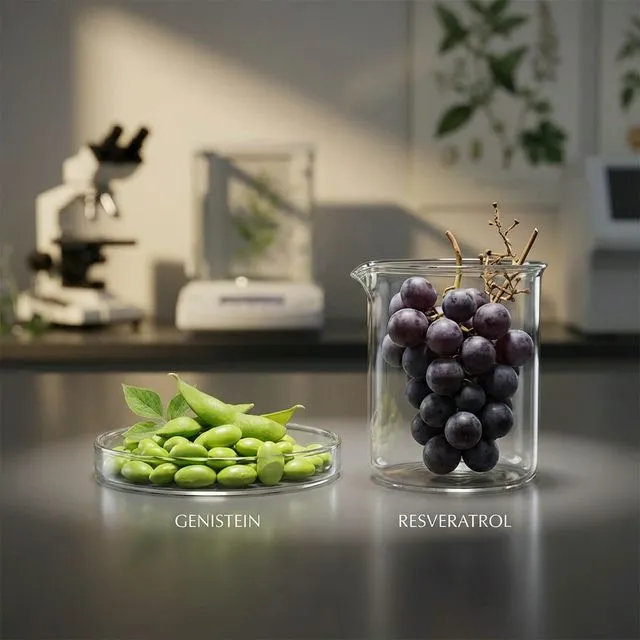
In the realm of plant-based nutraceuticals, polyphenols reign supreme. Among them, Genistein and Resveratrol are two of the most researched compounds, often celebrated for their antioxidant and anti-aging properties. While they share some similarities, their mechanisms of action and primary benefits differ significantly.
The Sources
- Genistein: An isoflavone predominantly found in soybeans and other legumes like fava beans and kudzu. It is a phytoestrogen, meaning it structurally mimics human estrogen.
- Resveratrol: A stilbenoid found in the skin of red grapes, berries (blueberries, cranberries), and peanuts. It is famously associated with the “French Paradox” and red wine.
Primary Health Benefits
Genistein: Hormonal Balance & Bone Health
Because of its phytoestrogenic structure, Genistein can bind to estrogen receptors in the body, albeit weakly.
- Menopausal Support: May help alleviate hot flashes and other symptoms of menopause.
- Bone Density: Supports bone formation and helps prevent osteoporosis, particularly in post-menopausal women.
- Cellular Health: Shows promise in regulating cell growth and apoptosis.
Resveratrol: Cardiovascular & Longevity
Resveratrol acts primarily as a mimetic of calorie restriction, activating pathways associated with longevity.
- Heart Health: Supports healthy blood flow and protects against LDL cholesterol oxidation.
- Sirtuin Activation: Like NMN, it activates SIRT1 genes, which are linked to lifespan extension and metabolic health.
- Brain Health: Crossing the blood-brain barrier to offer neuroprotective effects.
Absorption and Bioavailability
Both compounds suffer from low bioavailability when taken orally, as they are rapidly metabolized.
- Improving Genistein: Often consumed with fats or in a fermented soy matrix (like Natto/Miso) for better absorption.
- Improving Resveratrol: Modern formulations often use micronized powder or combine it with Piperine (black pepper extract) to enhance uptake.
Which Should You Choose?
- Choose Genistein if: You are focused on women’s health, hormonal balance during menopause, or bone density.
- Choose Resveratrol if: Your primary goals are cardiovascular protection, metabolic support, and general longevity.
Conclusion
Both Genistein and Resveratrol are potent tools in the nutraceutical arsenal. They are not mutually exclusive; in fact, they can work synergistically to support comprehensive health. Understanding their unique strengths allows for more targeted and effective supplementation.