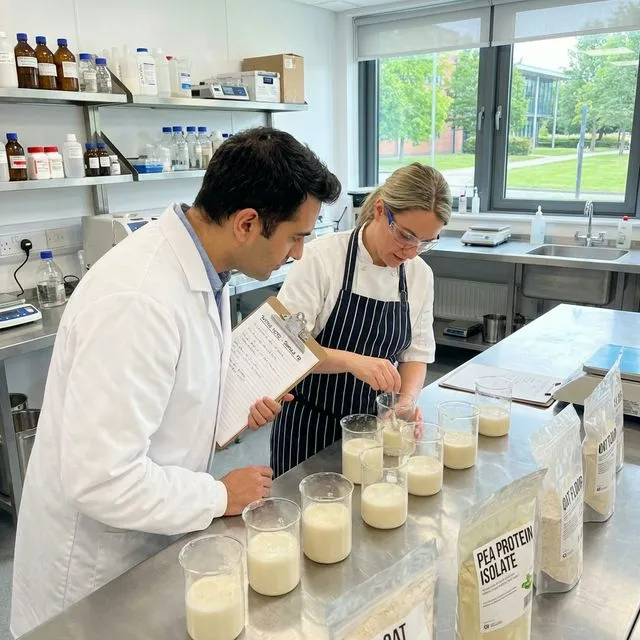
Formulating a plant-based protein shake used to be simple: mask the grit with heavy chocolate flavor and tell the consumer to “shake vigorously.” But in 2026, consumers expect their plant protein to be as smooth as dairy. They want ready-to-drink (RTD) beverages that are silky, neutral-tasting, and stable on the shelf.
This guide explores the technical challenges of working with pea and brown rice proteins and offers solutions for the modern R&D scientist.
Challenge 1: The “Gritty” Texture
Plant proteins, particularly Pea and Rice, have larger particle sizes and lower solubility than Whey protein. This leads to a sensation of “sandiness” or “chalkiness” in the mouth.
The Solution: Particle Size Reduction & Hydrolysis
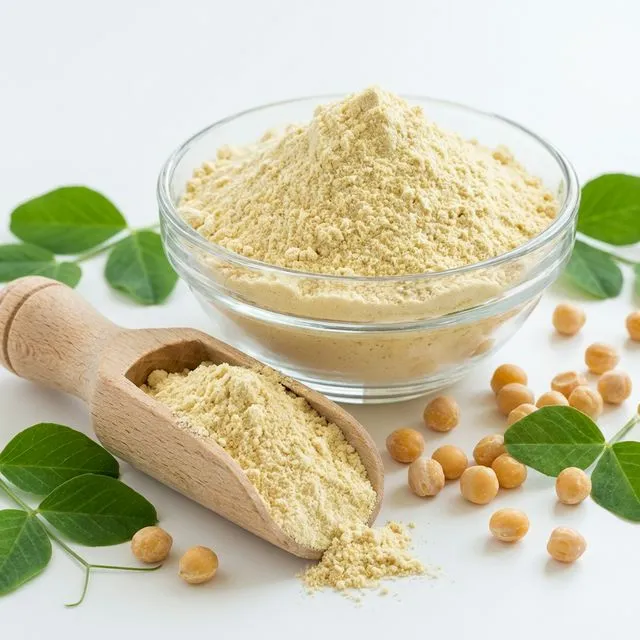
- Micronization: Standard pea protein has a particle size of 100-150 microns. ToNutra’s SmoothPea™ is air-classified down to <20 microns. At this size, the tongue cannot individually distinguish the particles, resulting in a creamy mouthfeel.
- Hydrolysis: By using protease enzymes to cleave long protein chains into shorter peptides, we increase solubility.
- Degree of Hydrolysis (DH):
- Low DH (3-5%): Improves emulsification but retains some viscosity. Good for meal replacements.
- High DH (10-15%): Extremely soluble, thinner texture. Ideal for functional waters and clear beverages.
- Degree of Hydrolysis (DH):
Challenge 2: “Beany” Off-Notes
Pea protein naturally contains hexanal compounds that give it a “grassy” or “beany” active flavor. Brown rice protein can have a “cereal” or “cardboard” note.
The Solution: Clean Processing & Masking
- Cold-Water Wash: We utilize a proprietary cold-water filtration process that removes the majority of carbohydrates and fats where these flavor compounds reside, leaving a cleaner protein isolate (85%+).
- Flavor Masking:
- Vanilla/Cream: Modulating with naturally derived vanilla or cream flavors creates a “dairy-like” base note that rounds out the sharp edges of plant protein.
- Salt: A pinch of sea salt (0.1-0.2%) is remarkably effective at suppressing bitterness.
Challenge 3: Solubility & Sedimentation
In RTD applications, plant proteins tend to separate over time, leaving a layer of sludge at the bottom of the bottle.
The Solution: Hydrocolloids & Buffering
- Stabilizers:
- Gellan Gum: Excellent for suspension at very low usage rates (0.02-0.05%). It forms a fluid gel network that holds particles in suspension without making the drink thick.
- Acacia Gum: Adds mouthfeel and acts as a natural emulsifier.
- pH Management:
- Pea protein has an isoelectric point (pI) around pH 4.5. At this pH, it has zero net charge and precipitates out of solution immediately.
- Strategy: Formulate away from the pI. Either aim for a neutral pH (6.5-7.5) for “milks” or acidify below pH 3.5 using our ClearPea™ intended for acidic beverages.
Formulation Checklist
Before you finalize your next SKU, run through this checklist:
- Solubility Test: Does it dissolve fully in cold water with minimal agitation?
- Sedimentation Test: Let it sit for 24 hours. Is there a hard pack?
- Heat Stability: If pasteurizing (UHT/HTST), does the protein denature and gel?
- Flavor Profile: Is the sweetness balanced? Have you effectively masked the base notes?
Ready to Test?
ToNutra offers a full range of Functional Plant Proteins designed for specific applications.
- Pro-Pea 85 (Standard): For powders and bars.
- SmoothPea 80 (Micronized): For premium creamy shakes.
- ClearPea 90 (Hydrolyzed): For sports drinks and functional waters.
Request a sample kit today and taste the difference.